

Publishing blog post after blog post without seeing page-one organic traffic is one of the most frustrating challenges in digital marketing. For years, standard advice was simple: write long-form articles, insert keywords every few paragraphs, and build as many backlinks as possible.
However, search engine algorithms have evolved drastically. Modern search engines prioritize Search Intent—the underlying problem a user wants to solve when typing a query—over simple keyword repetition or raw link volume. If your content fails to directly satisfy what the searcher wants to accomplish, search engine rankings will quickly slip.
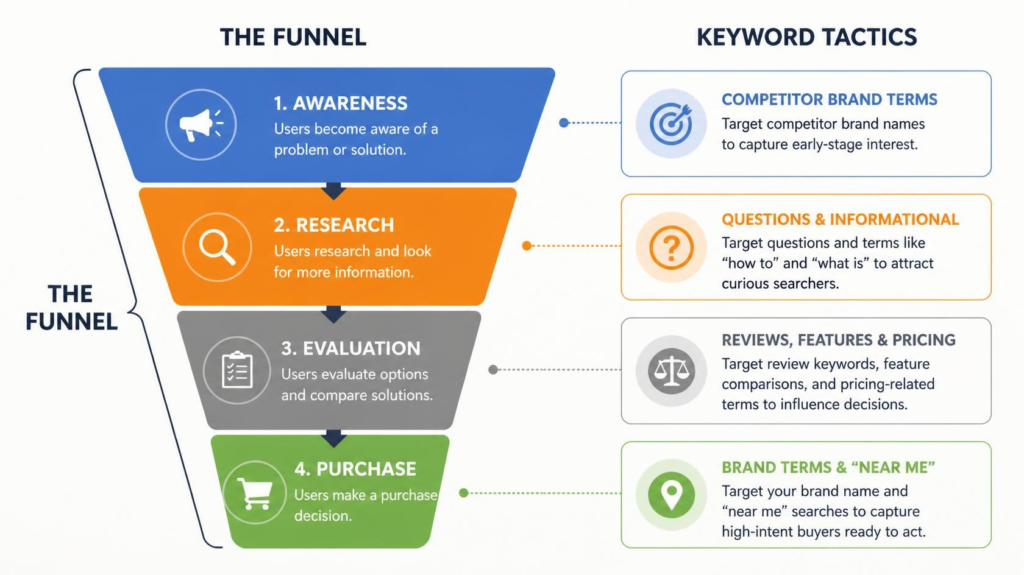
What Is Search Intent (And Why It Dictates Rankings)?
Search intent (also known as user intent) is the primary objective a searcher has when entering a search query.
When a user submits a query, search engines analyze historical click patterns, session lengths, and user behavior to determine whether searchers want a quick definition, a step-by-step tutorial, a tool comparison, or a product landing page. Satisfying this intent is the single most critical factor for sustainable organic visibility.
The 4 Core Types of Search Intent
To structure your content strategy effectively, map every target keyword to one of these four categories:
- Informational Intent: The searcher wants to learn about a topic or solve a specific problem (e.g., “How to calculate ROI”, “What is technical SEO”).
- Navigational Intent: The searcher is trying to reach a specific brand page or online destination (e.g., “Ahrefs dashboard login”, “Google Search Console”).
- Commercial Investigation: The searcher is comparing solutions before making a purchase decision (e.g., “Best SEO tools for agencies”, “Semrush vs Moz”).
- Transactional Intent: The searcher is ready to buy a product or hire a service (e.g., “Buy SEO audit package”, “Hire content agency”).
Traditional SEO vs. Modern Intent-Driven SEO
Understanding how organic search strategy has shifted helps you allocate marketing effort effectively:
| Focus Area | Traditional Keyword Strategy | Modern Intent-Driven SEO Strategy |
| Primary Goal | Search volume matching | Precise user satisfaction & problem-solving |
| Content Metric | Raw word count & keyword density | Clarity, depth, & skimmable structure |
| User Experience | High-density keyword blocks | Immediate answers & logical heading hierarchy |
| Ranking Metric | Keyword placement & backlink count | Low bounce rate, dwell time, & user engagement |
Step-by-Step: How to Align Your Blog with Search Intent
1.Analyze Top SERP Results:Identify the content format search engines already prefer.
Search your target primary keyword in an incognito window. Examine the top 3–5 search results carefully. Take note of whether search engines favor how-to guides, listicles, interactive tools, or short definitions. If top-ranking pages are step-by-step guides, publishing a promotional product page will rarely rank on page one.
2.Map Content Structure to Query Micro-Questions:Use headings to cover subtopics searchers expect.

Recommended Hosting: If you're looking for an affordable, super-fast host with outstanding uptime and 24/7 support, we recommend Hostinger.
Review the “People Also Ask” box and related search queries at the bottom of the SERP. Incorporate these sub-questions into your ## headings and ### subheadings. This demonstrates topical thoroughness to search crawlers while making the article easy to scan.
3.Front-Load the Core Answer:Deliver immediate value in your intro.
Avoid long, generic introductions. Provide a direct answer or key summary within the first 100 words of the post. When readers find quick, helpful context immediately, on-page engagement improves significantly.
4.Optimize Visuals & Mobile Technical Signals:Enhance page performance and accessibility.
Use clear diagrams, charts, or images with descriptive file names and natural keyword alt text. Ensure fast page load speeds and clean formatting across desktop and mobile screens.
Frequently Asked Questions
Q: Can a single blog post target multiple intent types?
A comprehensive article can cover related secondary questions, but every piece of content should have one primary intent. Focusing 80% of your post on that primary goal keeps your message clear to both readers and search crawlers.
Q: How long should an SEO blog post be?
There is no single required word count. Match the depth required to answer the query better than existing top-ranking pages—some topics take 700 concise words, while complex technical subjects need 2,000+ words. Value and clarity always beat superficial length.
Key Takeaway
Ranking consistently at the top of search engine results pages requires shifting focus from “What keywords can I repeat?” to “What complete solution does the searcher need?” Aligning content layout with user intent builds long-term organic authority and search visibility.
Looking For Free SEO Tool? Visit SEOOTOOL
Read More: Technical SEO: The Complete Guide to Building Search Infrastructure









Rickyh Style School Backpack Travel Bag for Men & Women Lightweight College